
Spice
Spices, Herbs & More(including Yakuzen tea ingredients)
Here are the spices, herbs and Yakuzen tea (Japanese herbal tea) ingredients we use in our drinks at AMA. chai_lab.
For each, we describe its aroma and flavor, main components, traditional uses, and its connection to crude drugs and kampo medicine.
Spice
-
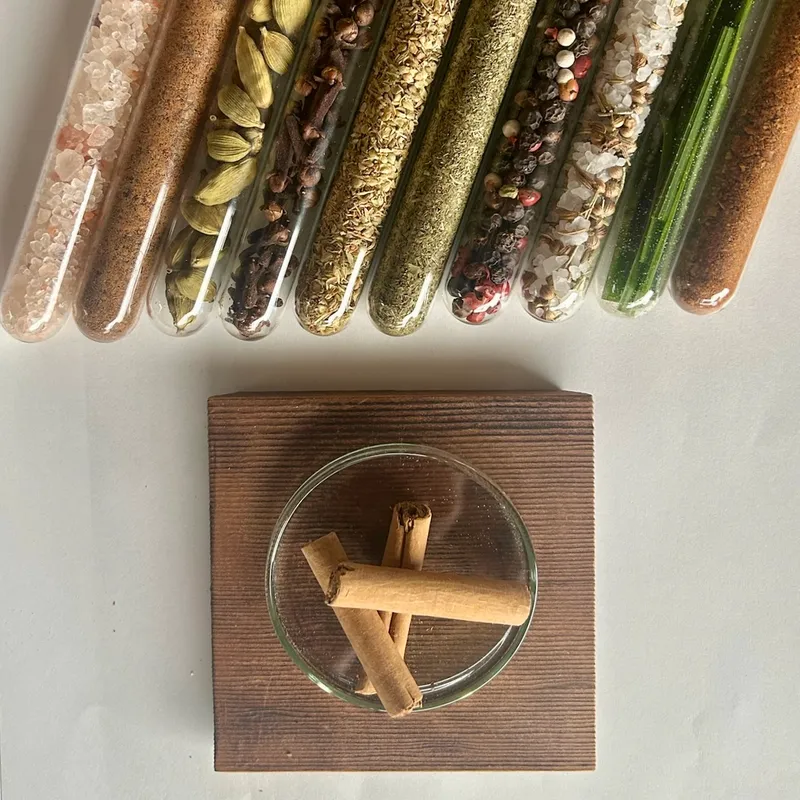
Cinnamon
- Aroma & flavor
- A sweet, warm aroma. It adds a gentle sweetness that forms the base of our chai.At AMA. chai_lab., we mainly use Ceylon cinnamon in our chai, and cassia when we want a stronger spice character in cooking.
- Main components
- Cinnamaldehyde (the source of its aroma)
- Traditional use
- The bark of a tree in the laurel family. It is said to have been used as a fragrance since ancient Egypt, and in kampo it is used as the crude drug "keihi." Kyoto's famous sweet yatsuhashi uses nikkei, another member of the laurel family. Each is chosen for its own aroma, sweetness and heat.
- Crude drug name & use in kampo
- Keihi (桂皮). It is included in kakkonto, used for sweating, fever relief, sedation and easing spasms, and in ryokeijutsukanto, used to relieve lightheadedness and dizziness.
-
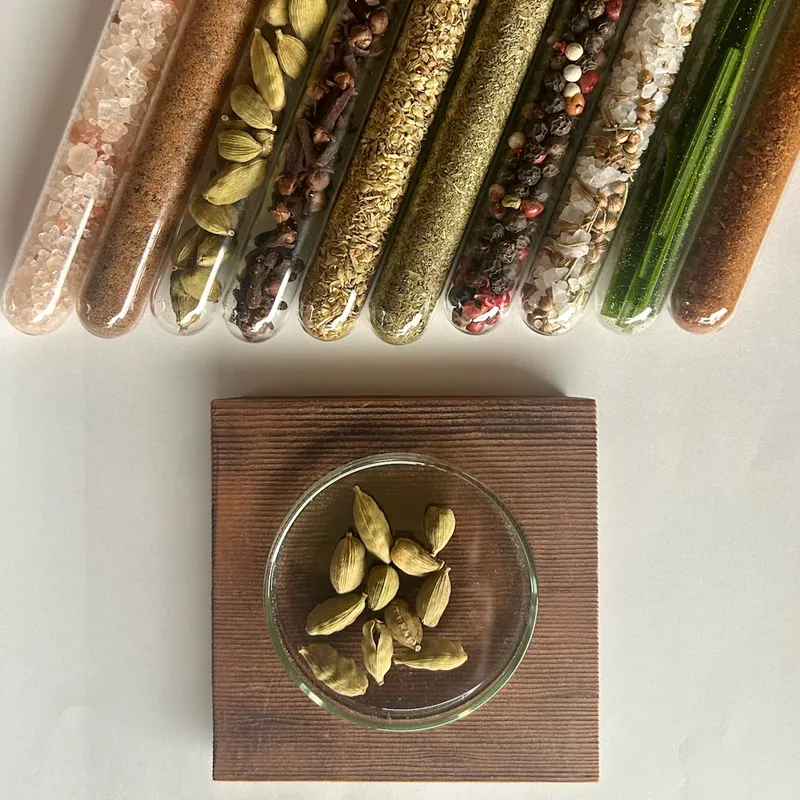
Cardamom
- Aroma & flavor
- A bright, refreshing and floral aroma. It is called "the queen of spices" and is said to be the third most expensive spice in the world. Breaking open the scentless pod to release the seeds brings out its fresh aroma.At AMA. chai_lab., it goes into every chai, and we also use it in dishes and desserts with peaches or persimmons.
- Main components
- 1,8-cineole, α-terpinyl acetate
- Traditional use
- The seeds of a plant in the ginger family. In India it is loved as an essential spice not only for chai but also for curry.
- Crude drug name & use in kampo
- Shōzuku (小豆蔲). Used in digestive and stomach-settling formulas as a substitute for byakuzuku (白豆蔲).
-
Clove
- Aroma & flavor
- A sweet, rich aroma with a slight bite. A small amount adds depth to the flavor.One of the base spices of AMA. chai_lab.'s chai. Its aroma has a distinct character, and we sometimes finish with a sprinkle of ground clove.
- Main components
- Eugenol
- Traditional use
- The dried flower buds of the clove tree, in the myrtle family. Named "chōji" (丁子) in Japanese for its nail-like shape, it is widely used in kampo as a crude drug, valued for settling the stomach, stopping hiccups, warming the body's interior, and its antibacterial action.
- Crude drug name & use in kampo
- Chōji (丁子). Best known as an ingredient of jidabokuippo (a prescription medicine), used for swelling and pain from bruises and sprains.
Coming soon...
-
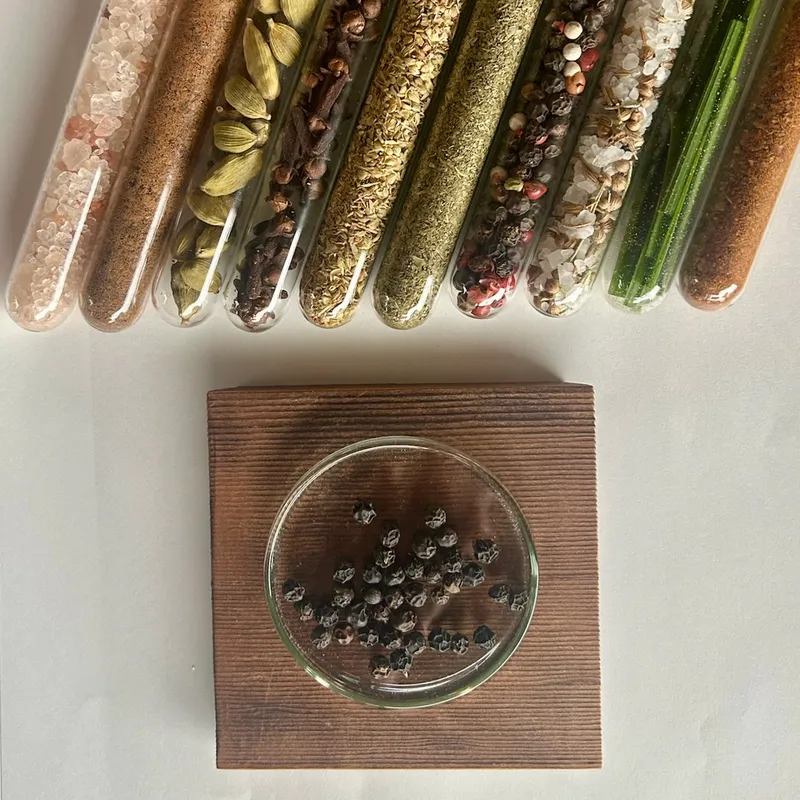
Black pepper
- Aroma & flavor
- A sharp heat and a clean aroma. It brings balance to the sweetness of chai.One of the base spices of AMA. chai_lab.'s chai. We also use it, mostly coarsely ground, in many dishes.
- Main components
- Piperine (the source of its heat)
- Traditional use
- The fruit of a climbing vine in the pepper family. Once said to be worth as much as gold, it is one of the most widely used spices in the world.
- Crude drug name & use in kampo
- Koshō (胡椒). Traditionally classed as a warming herb, but it is not used in prescription kampo crude drugs in Japan today (white pepper was generally used for medicinal purposes).
-
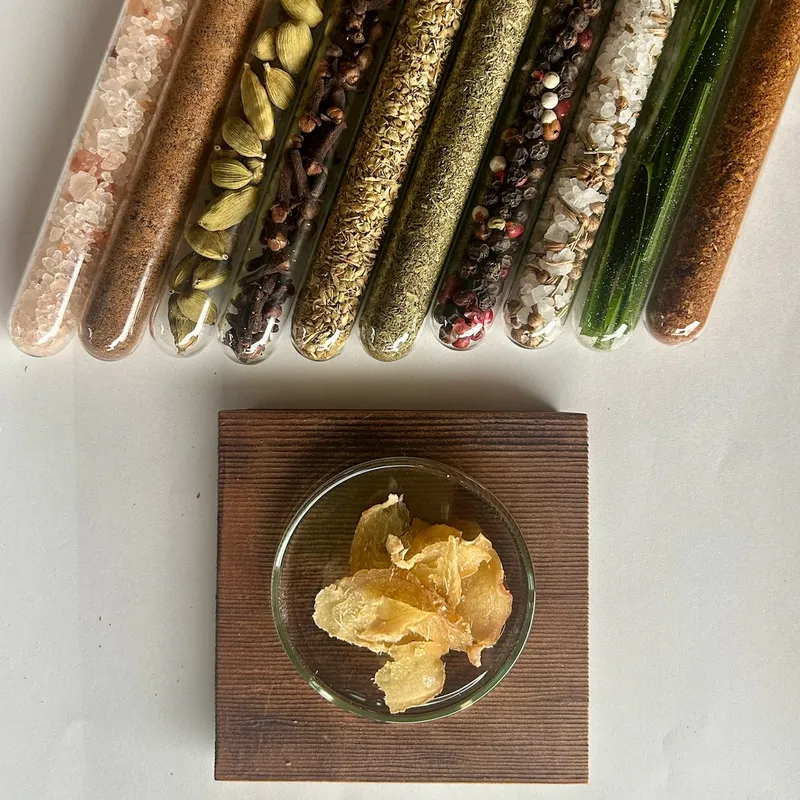
Ginger
- Aroma & flavor
- A fresh heat and aroma. It gives our chai a bold accent.For AMA. chai_lab.'s chai, we recommend adding our homemade ginger syrup or a topping of ginger chips. It is also an essential secret ingredient in many dishes.
- Main components
- Gingerol, shogaol (the source of its heat)
- Traditional use
- The rhizome of a plant in the ginger family. Eaten in Japan since ancient times and often used in drinks for the cold season. In kampo it is used as the crude drugs "shōkyō" and "kankyō."
- Crude drug name & use in kampo
- Shōkyō (生姜). Valued for warming the body's surface to promote sweating, it is included in kakkonto, keishito, kamishoyosan and other formulas.
Kankyō (乾姜). A crude drug made by a different process from shōkyō. Valued for warming the body's core and abdomen, such as a chilled stomach, it is included in shoseiryuto, daikenchuto, hangeshashinto and other formulas.
-
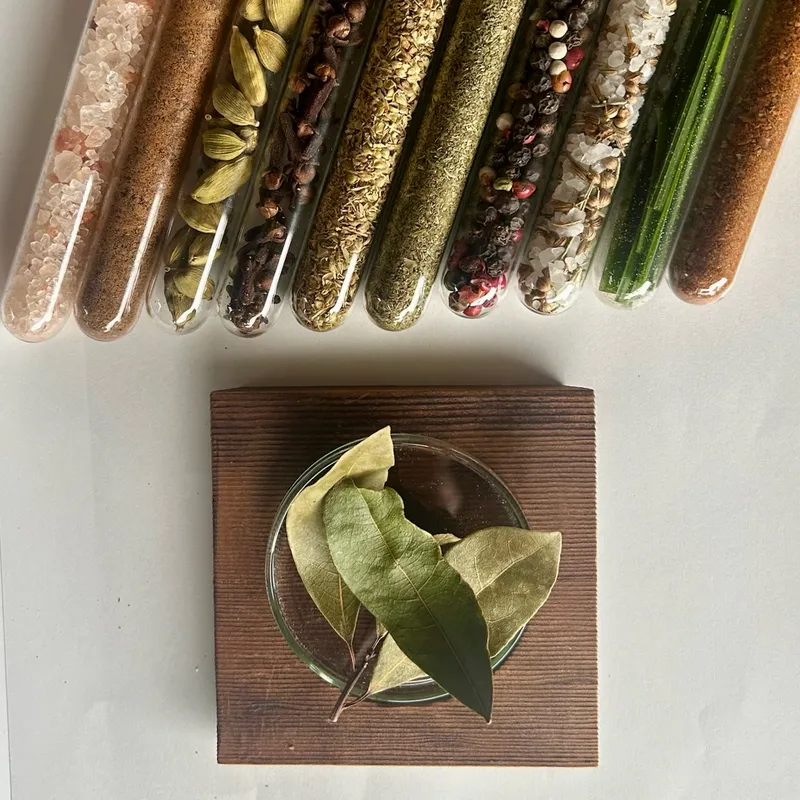
Bay laurel
- Aroma & flavor
- A refreshing coolness with an elegant, gently sweet aroma. Added to chai, it fills the gaps between strong spices such as cardamom and clove, bringing the whole aroma into clean harmony.At AMA. chai_lab., some of our chai recipes use it and some do not. It is essential in soups, and we take it out partway through so it does not turn bitter.
- Main components
- 1,8-cineole (eucalyptol), linalool
- Crude drug name & use in kampo
- Gekkeiyō (月桂葉). A herb native to Europe; it is not used in any kampo formula.
-
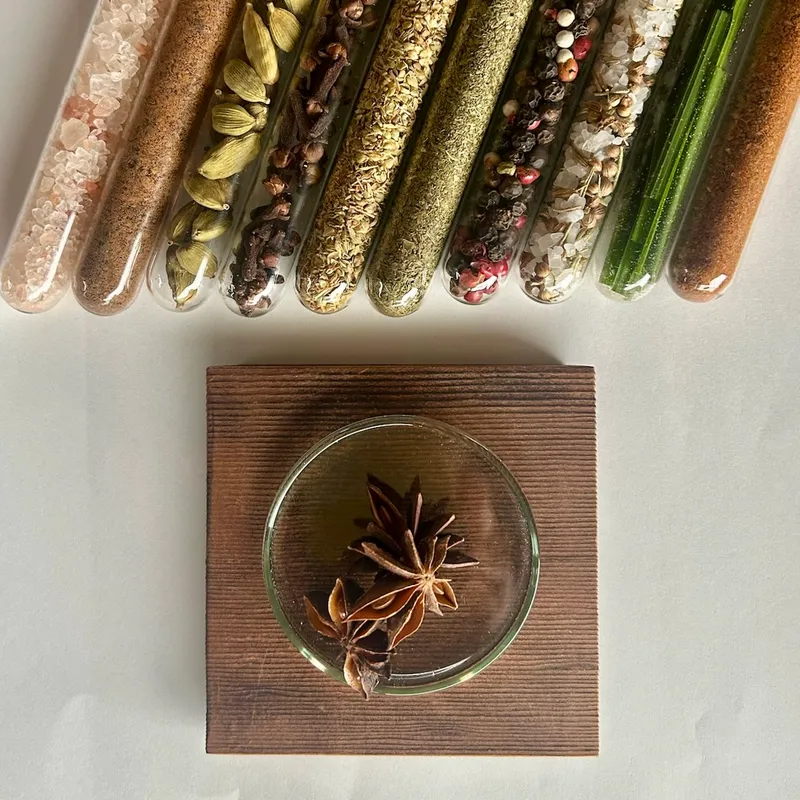
Star anise
- Aroma & flavor
- A sweet, powerful yet mellow aroma. Its eight-pointed star shape gives it the Japanese name "hakkaku" (eight horns).At AMA. chai_lab., we sometimes use it in chai for guests who don't care for cinnamon. Its pretty shape also makes it a nice topping.
- Main components
- Anethole
- Traditional use
- The dried ripe fruit of Chinese star anise, in the Schisandraceae family. Highly aromatic and valued for settling the stomach, it is often used to flavor Chinese cuisine.
- Crude drug name & use in kampo
- Daiuikyō (大茴香). It is not included in any kampo medicine in Japan (it differs from uikyō, or fennel, used in anchusan, but is similar in aroma and components).
-
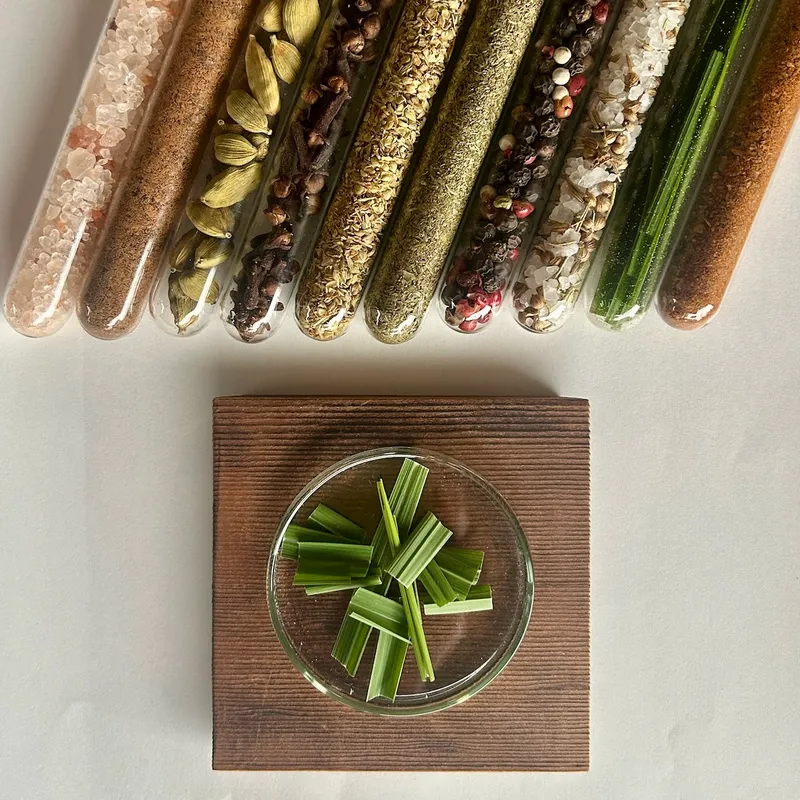
Lemongrass
- Aroma & flavor
- A fresh aroma reminiscent of lemon and citrus, with a hint of green, that sharpens milk tea and leaves a light aftertaste.At AMA. chai_lab., we blend it into chai for those who like a punchy chai, and into iced chai in summer. It also goes into our summer Yakuzen tea made with sencha or oolong tea.
- Main components
- Citral, geraniol, etc.
- Crude drug name & use in kampo
- Kōbō (香茅). It is not used in Japanese kampo formulas, but in Southeast Asian traditional medicine and Ayurveda it is used to promote sweating and the flow of qi.
-
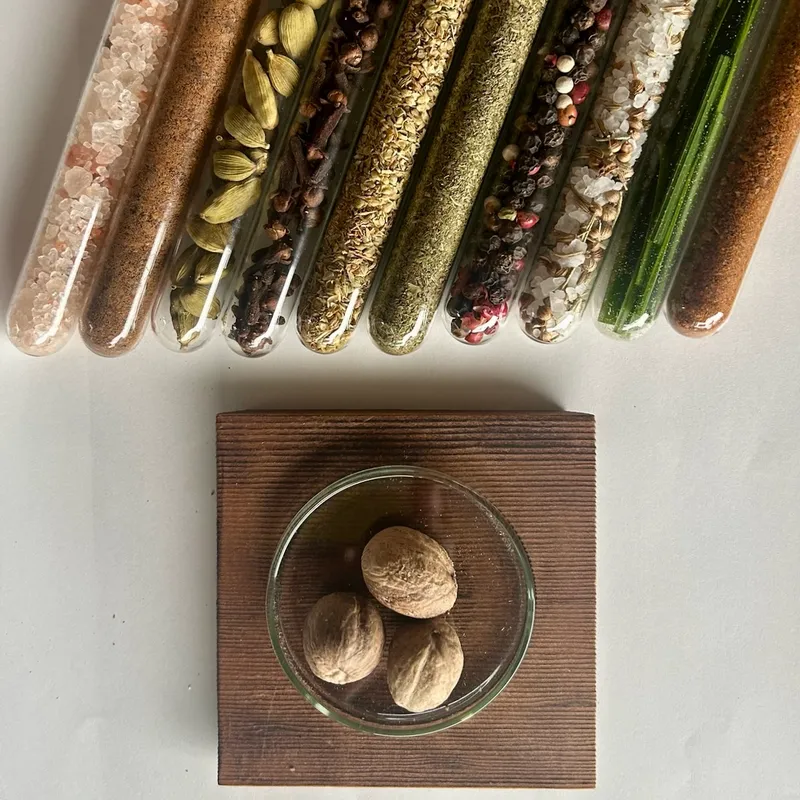
Nutmeg
- Aroma & flavor
- A sweet, slightly sharp aroma with a faint bitterness. It pairs well with meat dishes, baked sweets and milk, and a small amount adds depth to the flavor.At AMA. chai_lab., we sometimes use it as a supporting spice in chai, or grate it over meat dishes and sweets.
- Main components
- Myristicin, sabinene, etc.
- Traditional use
- The seed kernel of an evergreen tree in the Myristicaceae family. Native to the Moluccas (the Spice Islands) of Indonesia, it has long been used to flavor meat dishes and sweets and for medicinal purposes, and was one of the stars of the spice trade in the Age of Exploration.
- Crude drug name & use in kampo
- Nikuzuku (肉豆蔲). A crude drug listed in the Japanese Pharmacopoeia, traditionally used for the stomach and intestines. Large amounts should be avoided.
Herb
Coming soon
Others(Yakuzen tea ingredients, etc.)
Coming soon
The information on crude drugs and kampo medicines describes how each ingredient is used as a crude drug. It does not suggest that our drinks or food have any specific effect or benefit.