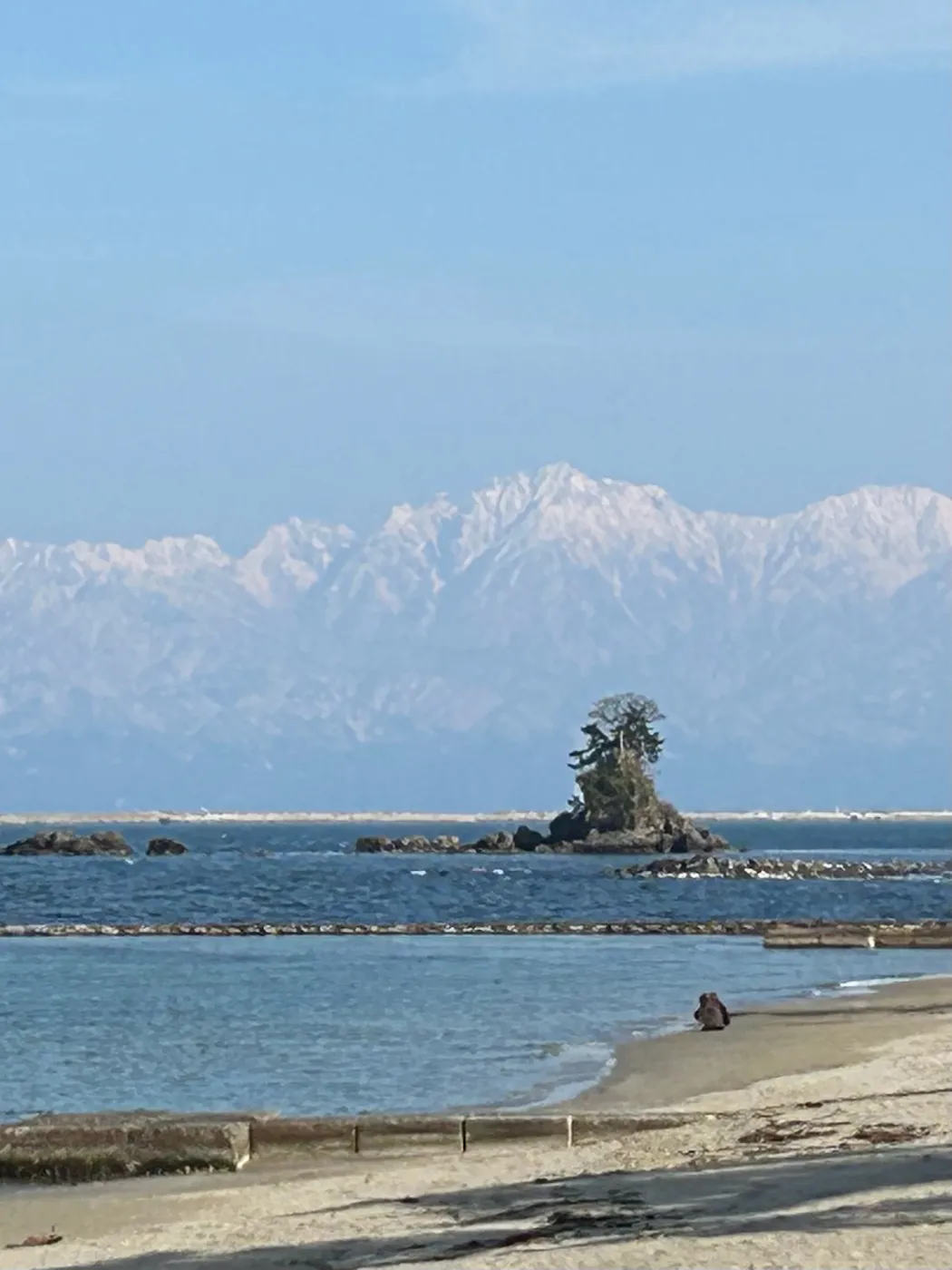
In the Nara period, the poet Ōtomo no Yakamochi, posted as provincial governor to what is now Takaoka, wrote poems on the beauty of this shore, and is said to have invited friends to ride out to it on horseback. The Amaharashi Coast has been loved by poets and writers since the 8th century.
The shore Yakamochi also gazed upon
The name "Amaharashi"
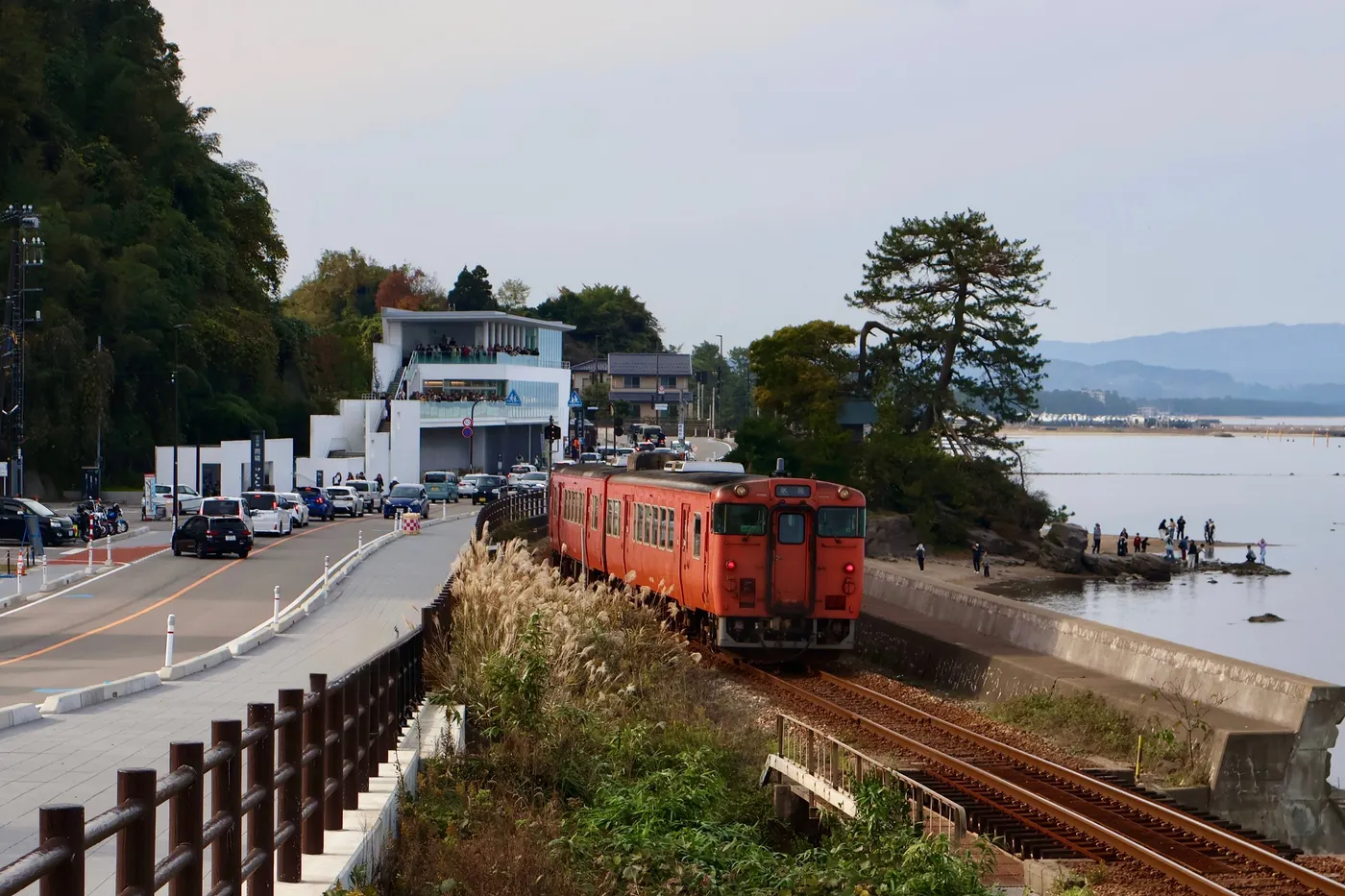
On the shore stands Yoshitsune Rock, where Minamoto no Yoshitsune is said to have taken shelter from the rain. It is still called by that name today. The place name "Amaharashi" (literally "rain clearing") is also said to come from this legend.
Yoshitsune Rock, the train and Michi-no-Eki Amaharashi
The setting of Yorushika's "Tada Kimi ni Hare"
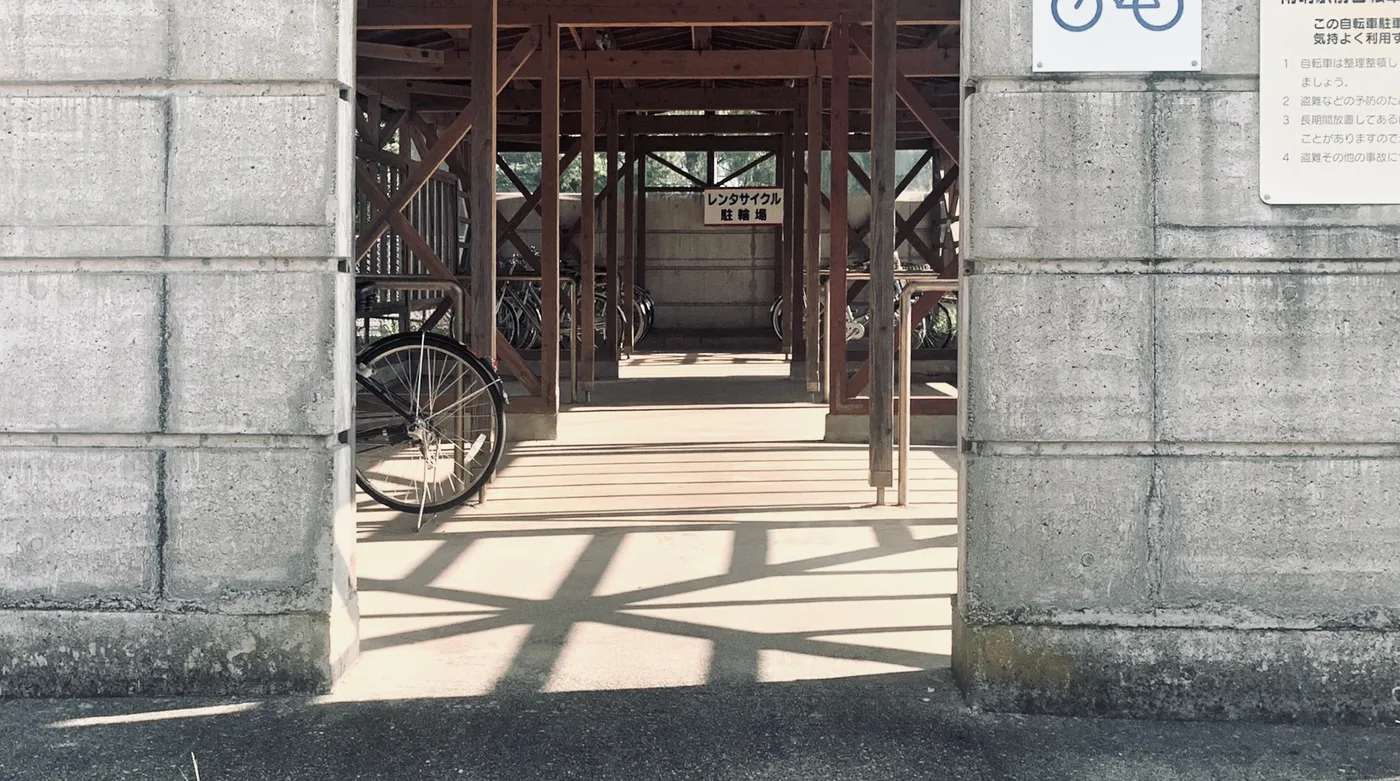
The area around the Amaharashi Coast and Amaharashi Station was a filming location for the music video of "Tada Kimi ni Hare" by Yorushika. Many of the places in the video, such as the station platform, the tracks, the bicycle shed by the station and the seaside views, are just a short walk from our café.
The bicycle shed by Amaharashi Station seen in the MV. It has since been renovated, and no longer looks as it did
Chapter 2Architecture
The Story of the Building
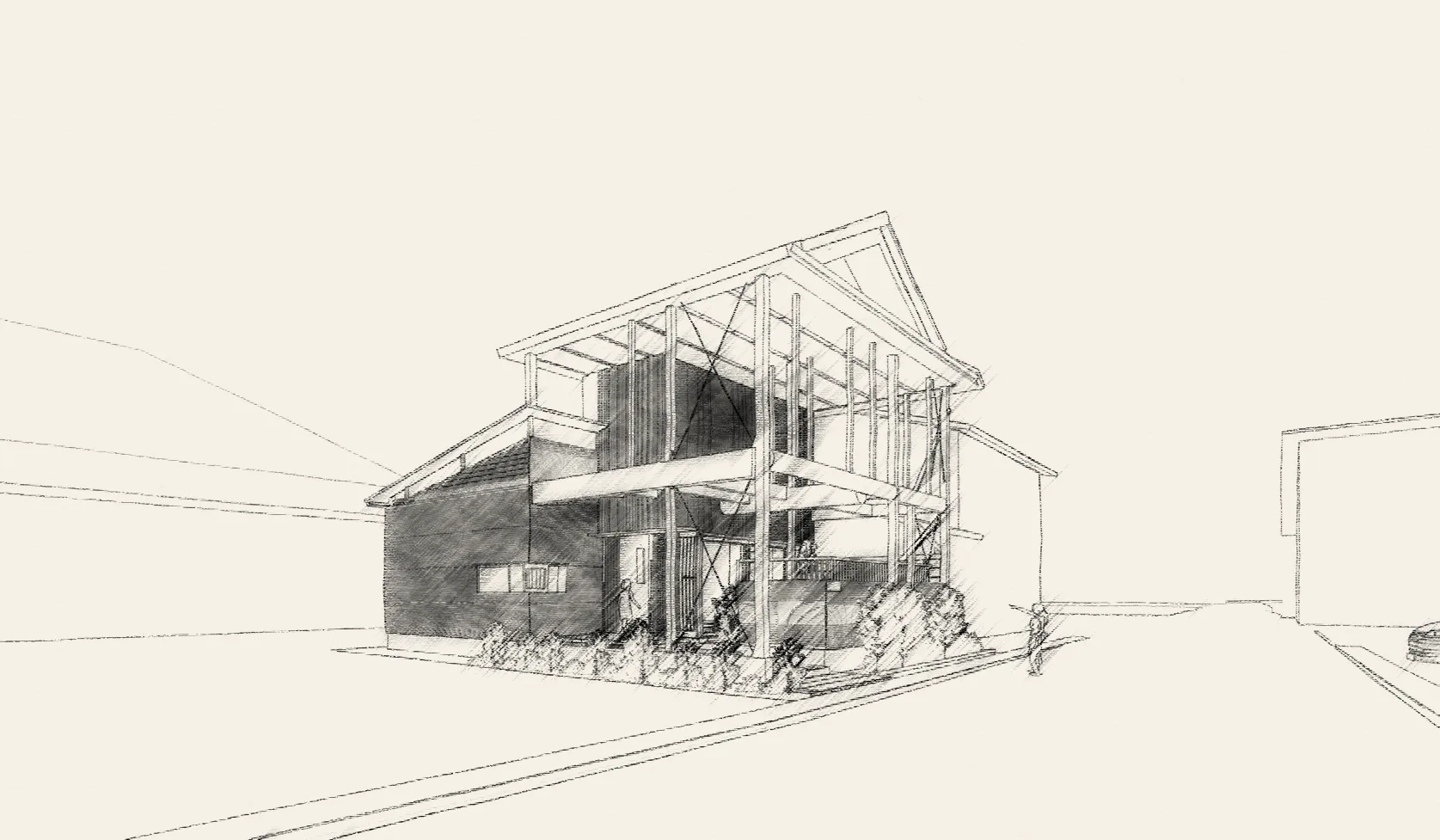
The building was made to keep the scenery of the old seaside road, with a front that stays open to the neighborhood.
Sketch of the finished building
Why we kept the building
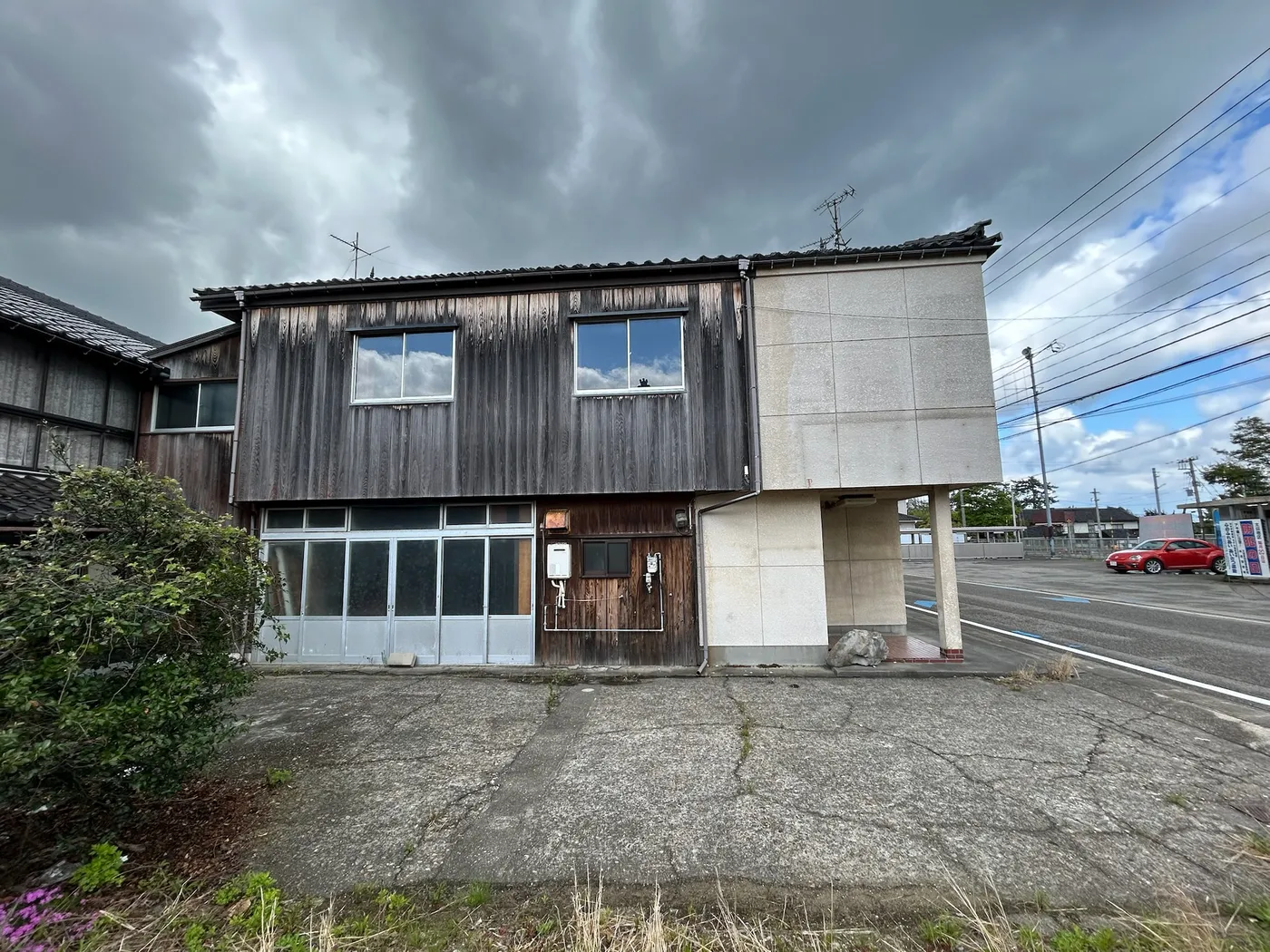
A two-story Shōwa-era building standing proudly right in front of Amaharashi Station. Once familiar to locals as a shop and an inn, it held one small surprise, "two stories, but no stairs," yet it boasted a sturdy frame. By carefully keeping what was old and layering a new sensibility on top, we felt we could create a café perfectly suited to the station front of this town.
What we kept, what we renewed
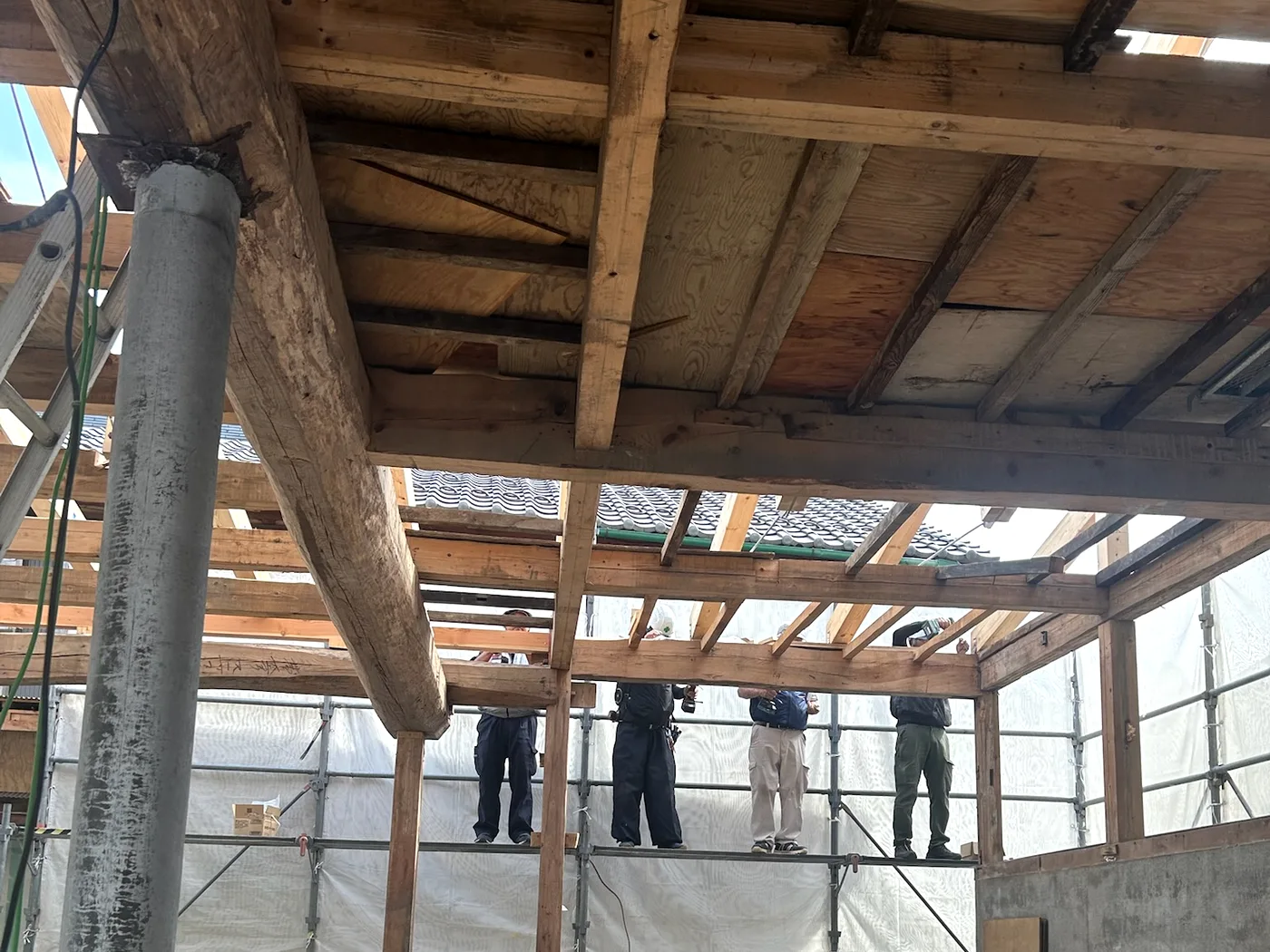
Long unused, it was worn in many places, but its heavy black-tiled roof and magnificent log beams, which would be almost impossible to use today, were captivating. The challenges were that it was a little too large for what was needed, and that its outer wall, jutting toward the street, felt imposing to the town. So we boldly removed the second floor and reduced the first-floor area. By adjusting the ceiling height to a comfortable scale and adding new insulation and finishes, we updated it into a compact, modern space. On the street side we created a semi-outdoor space open to the town, keeping the beautiful original structure while adding the reinforcement it needed, so that a generous sense of open space could emerge.
Thoughts behind the design
The road in front is the Etchū Hama Ōrai, traveled by people since long ago. People in the past surely stopped here too, struck by the beautiful view, to catch their breath. People stepping off the train or strolling through town drop by on a whim, gaze at the beloved station building and the beautiful sea, and reflect on the layers of history. We hope it becomes a place deeply rooted in this land that adds depth to the town's scenery. We wish with all our hearts for the beginning of a new café loved by many people.
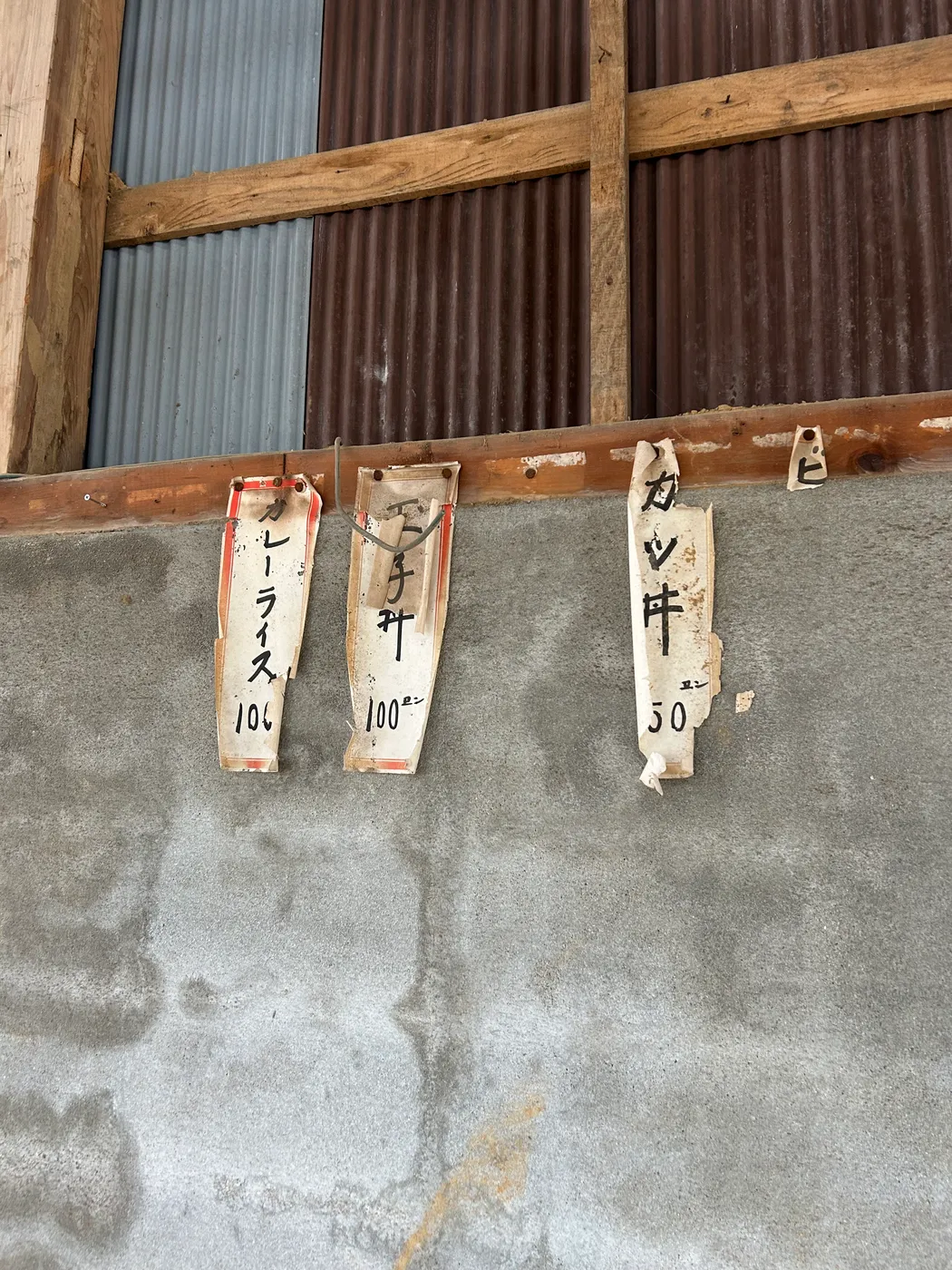
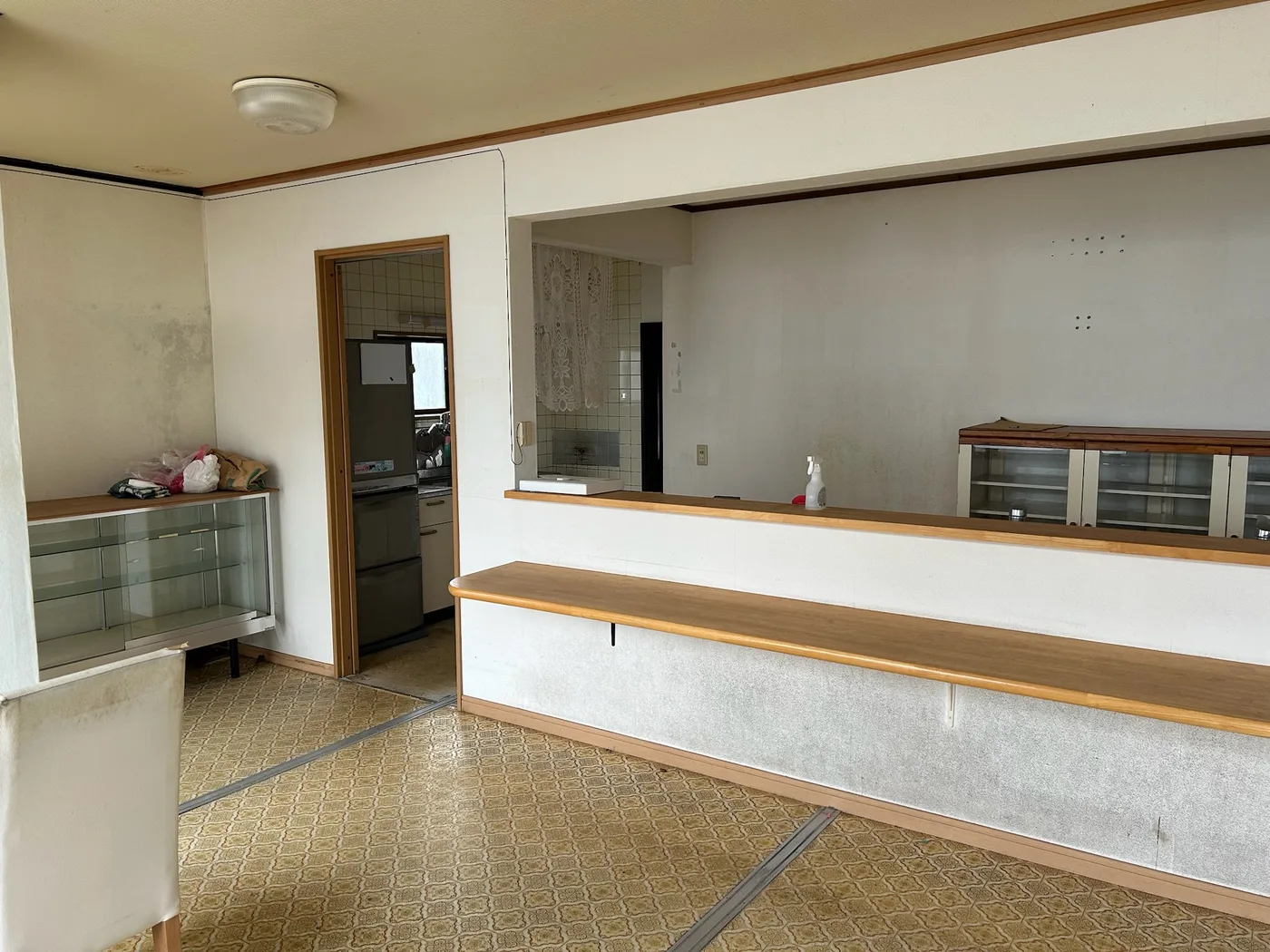
The menu from the late 1960s, when this building was a guesthouse. Amaharashi was then a busy swimming beach. The prices tell of their time.Inside the building in the Heisei era, when it was a diner. Traces of the counter and kitchen remain.